

Key Takeaways
The best strategies from a digital marketing agency for restaurants combine local visibility, online reputation management, and consistent customer engagement through channels like SEO, social media, and paid advertising.
Working with a restaurant-focused digital marketing agency is essential because diners increasingly rely on online searches, reviews, and social media before deciding where to eat. For Houston restaurant owners, a strong online presence can drive foot traffic, reservations, and delivery orders.
This guide outlines the key strategies used by a digital marketing agency specializing in restaurants, presenting them in a clear, educational format to help owners make informed decisions without falling for exaggerated claims or quick fixes.
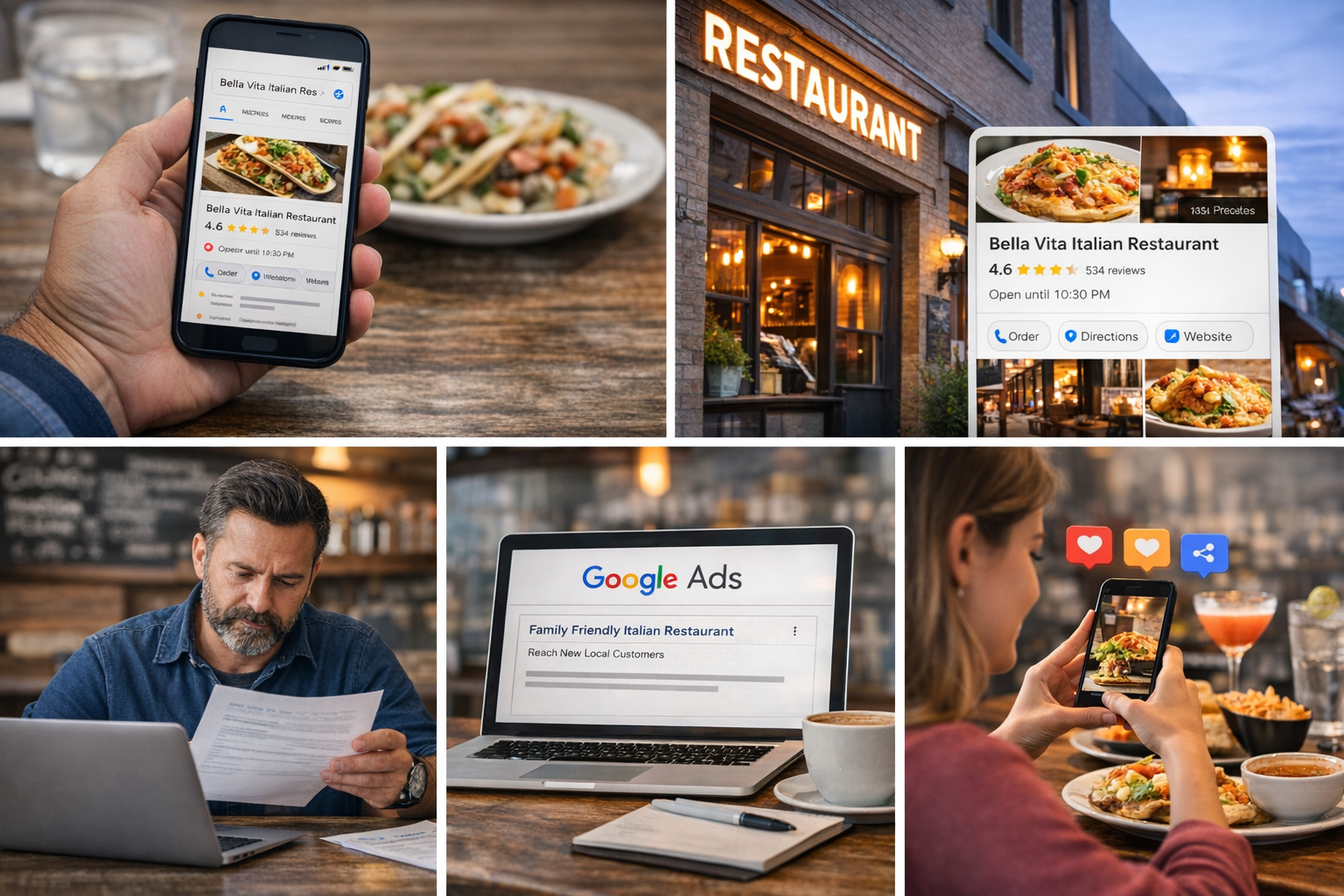
Restaurants face a highly competitive market where diners often make decisions based on online information. A restaurant-focused digital marketing agency helps manage a restaurant’s presence in search results, review sites, and social media, while maintaining consistent communication through email, SMS, and website updates.
In Houston, with its diverse dining scene and varied customer expectations, partnering with a digital marketing agency specializing in restaurants ensures eateries remain visible and relevant. The most successful strategies emphasize long-term consistency and data-driven optimization rather than chasing instant results.
Local SEO helps restaurants appear in search results when people search for dining options nearby. This includes optimizing Google Business Profile, ensuring accurate business details, and targeting local keywords that reflect your cuisine and service area.
Key elements include:
Local SEO is important because many restaurant searches include location-based intent. It requires ongoing maintenance to stay accurate and competitive.
Social media is an essential platform for restaurants to highlight menu offerings, special events, and customer experiences. A restaurant-focused digital marketing agency can assist in shaping brand identity and fostering engagement within the local community.
Effective social media marketing includes:
Social media results vary based on platform trends and audience preferences, so it is best used as a consistent brand-building channel rather than a guaranteed sales tool.
A restaurant’s website is often the first point of contact for customers seeking menus, location details, or reservations. A restaurant-focused digital marketing agency ensures the site is optimized for usability and search engine performance.
Important website elements include:
Online ordering and reservation systems can be integrated into the website, but they require regular updates to prevent inaccurate information or outdated menus.
Content marketing supports long-term visibility by creating useful and relevant content for customers. Restaurants can use content to explain menu items, share food stories, or provide local guides.
Content examples include:
Content marketing works best when it aligns with real customer questions and local search intent. It is not a quick fix but supports ongoing visibility.
Paid advertising helps restaurants reach new audiences or promote special offers. This may include search ads, social media ads, or local display ads.
Key considerations include:
Paid advertising is useful for short-term promotions, but requires careful management to avoid overspending or low-performing campaigns.
Email and SMS marketing help restaurants stay in touch with repeat customers and share promotions or updates. This strategy works well for loyalty programs, new menu announcements, and event reminders.
Best practices include:
Email and SMS are effective for retention but must be used responsibly to avoid overwhelming customers.
Restaurant marketing packages often combine services like SEO, social media management, website maintenance, and paid advertising into a single, cohesive plan. A restaurant-focused digital marketing agency can deliver ongoing support, allowing the restaurant to focus on operations without managing every task in-house.
The value of a package depends on:
Packages provide structure but should be evaluated based on transparency and fit rather than price alone.
Choosing the best strategy depends on your restaurant’s goals, budget, and market position. A good approach is to start with a clear understanding of current online visibility, customer behavior, and local competition.
Consider these steps:
A balanced strategy often combines local SEO, social media, and a simple paid campaign with ongoing measurement.
Digital marketing can support visibility, but it has limitations:
An ethical strategy focuses on transparency, realistic planning, and continuous learning rather than promises of instant growth.
Working with a restaurant-focused digital marketing agency can enhance your eatery’s online visibility and drive stronger customer engagement when strategies are implemented with clear objectives, consistency, and realistic expectations. The most effective methods combine local SEO, social media management, website optimization, quality content, and targeted advertising into a cohesive, well-balanced strategy.
Understanding the strengths and limitations of each strategy helps restaurant owners make informed decisions and build a sustainable online presence over time.
It provides online strategies such as SEO, social media, content marketing, and paid advertising to improve visibility and customer engagement.
SEO improves search visibility for local searches and helps customers find accurate information like menus, hours, and location.
Common elements include website updates, social media management, local SEO, and performance reporting.
Yes, it builds community awareness and shares menu updates, but results depend on consistency and audience preferences.
Results vary depending on competition, strategy, and market demand. Some channels show early indicators; others require long-term effort.
Paid advertising supports promotions, events, and visibility but requires budget management and tracking.
Yes, especially when strategies are aligned with local audience needs and realistic goals.
If you want clarity on which services from a digital marketing agency for restaurants fit your business, a strategy call can help evaluate options and plan next steps. Informational, no pressure, and designed to support informed decisions.