

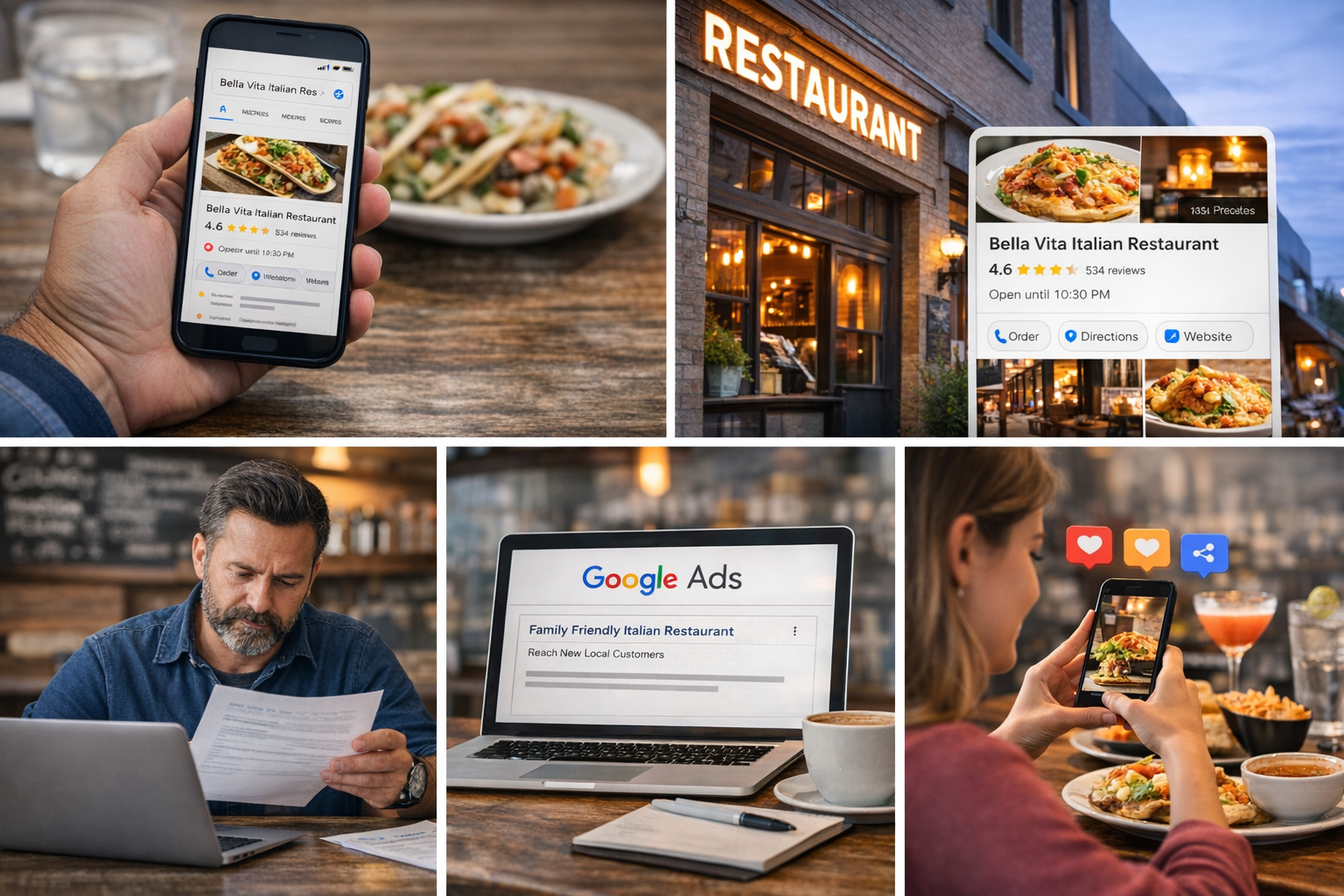
Houston’s social media marketing impacts local search signals by improving brand visibility, reinforcing location relevance, and supporting user engagement that search engines can interpret as trust and authority indicators. While social media activity does not directly control search rankings, it plays an important supporting role in how businesses are discovered and evaluated online.
This topic matters for Houston businesses because local competition is high, and customers often interact with brands across multiple platforms before making decisions. Understanding how social media connects with local search helps business owners use their time and resources more effectively.
Search engines use a wide range of signals to assess relevance and credibility. Social media is not a direct ranking factor, but it contributes indirect signals that support local visibility.
These signals may include:
When aligned properly, social media supports a broader digital presence that complements local SEO efforts.
Houston is a large, diverse market with businesses competing for attention across industries. Houston’s Social media marketing strategies help businesses stay visible where local audiences already spend time.
For local businesses, social media supports:
Social media does not replace search optimization, but it strengthens the overall digital footprint that supports discoverability.
Core Social Media Activities That Support Local Signals
Posting content that references local areas, events, or services helps reinforce geographic relevance. This may include location tags, local hashtags, or references to Houston-specific topics.
Location relevance helps both users and platforms associate a business with a specific area, supporting consistency across channels.
Engagement signals such as comments, messages, and shares indicate active audience interest. While these actions do not directly influence rankings, they support brand credibility and visibility.
Responding to questions, reviews, and comments also improves user experience and trust, which can influence how customers interact with the brand across platforms.
Optimized social profiles include accurate business names, addresses, phone numbers, and service descriptions. Consistency across profiles supports local trust signals.
Incomplete or inconsistent profiles can create confusion for users and reduce the effectiveness of social media as a supporting channel.
Social platforms help distribute content beyond a website. Blog posts, updates, and announcements shared socially may reach local audiences who then search for the business directly.
This indirect visibility can lead to branded searches, which are commonly associated with stronger local presence over time.
Social media optimization focuses on improving profile structure, content clarity, and engagement practices. Businesses often work with social media optimization experts to ensure profiles align with platform guidelines and audience behavior.
Optimization activities may include:
Optimization supports consistency and usability rather than promotional outcomes.
Managing multiple platforms requires planning and consistency. Each platform serves a different role in local visibility.
Common platforms include:
Effective management focuses on relevance rather than being active everywhere at once.
Social media has limitations that businesses should understand:
Social media marketing in Houston strategies are most effective when viewed as part of a broader digital ecosystem, not a standalone solution.
Social media marketing in Houston supports local search signals by reinforcing visibility, engagement, and geographic relevance across digital platforms. While it does not directly control rankings, it contributes important indirect signals that support trust and discoverability.
By understanding how social media fits within a wider local search strategy, businesses can make informed decisions about content, platforms, and resource allocation without relying on unrealistic expectations.
Does social media directly affect local search rankings?
No. Social media does not directly control rankings, but it supports indirect signals such as visibility and brand recognition.
Which platforms are most useful for local businesses?
This depends on the audience and industry, but Facebook and Instagram are commonly used for local engagement.
How often should businesses post on social media?
Posting frequency should prioritize quality and relevance rather than volume.
Is social media optimization the same as SEO?
No. Social media optimization focuses on platform performance, while SEO focuses on search visibility. They support each other but serve different roles.
Can small businesses manage social media themselves?
Yes, if they have clear guidelines and realistic expectations around time and outcomes.
Do hashtags help with local visibility?
Local and relevant hashtags can support discoverability, but they should be used thoughtfully.
If you want clearer insight into how Houston’s social media marketing fits into your local visibility strategy, a strategy or discovery call can help explore options in an informed, low-pressure way. The focus is on understanding context, limitations, and practical considerations.