

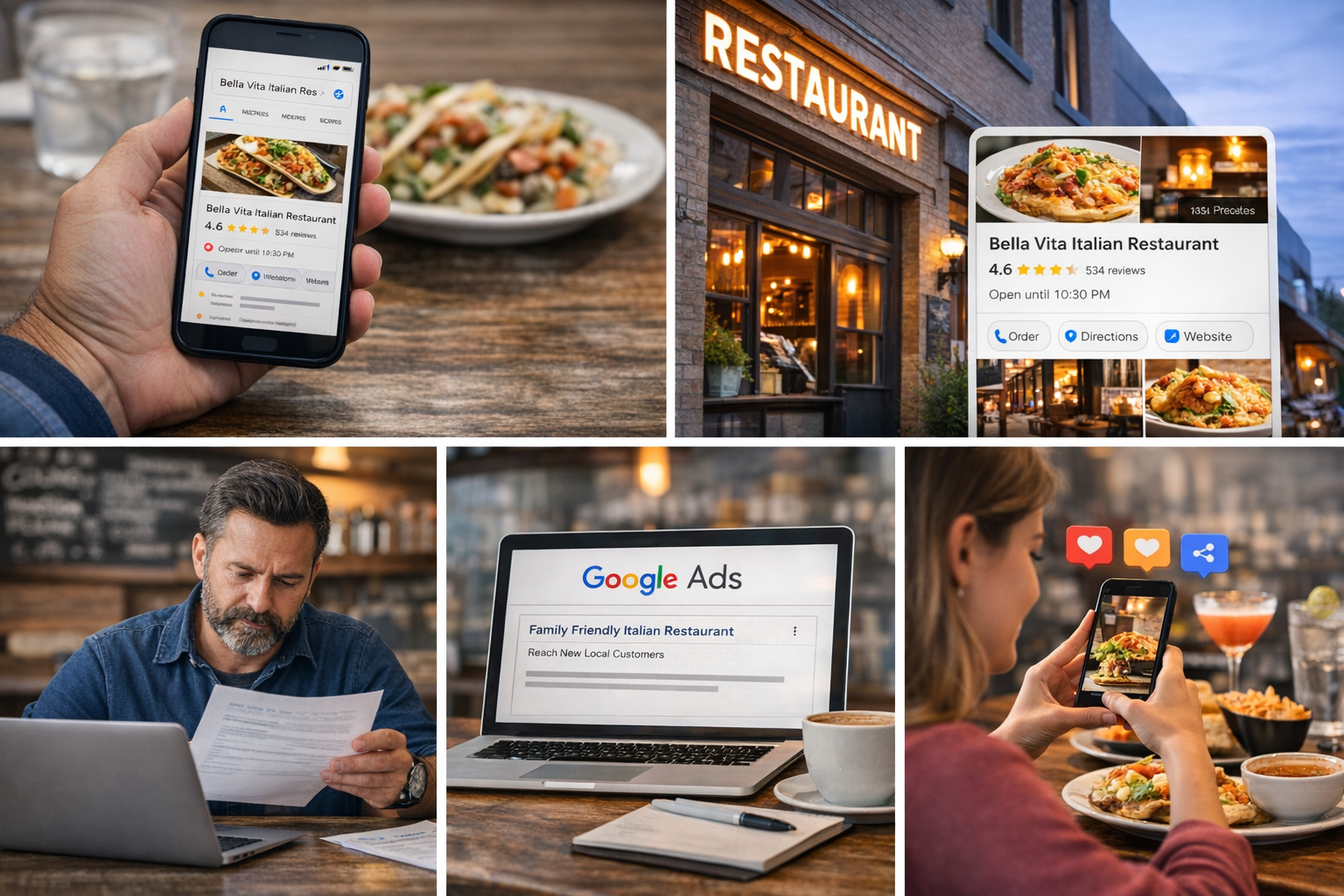

Digital marketing services in Houston typically help brands improve how customers discover, evaluate, and choose their business online. For restaurant owners and managers, this matters because dining decisions often begin with a quick search, a map listing, or a social media post. If a restaurant does not appear during that moment of discovery, it may not enter the customer’s consideration set at all.
For restaurants operating in Houston’s competitive food scene, digital visibility often determines whether potential diners become aware of a location before they visit nearby alternatives. Digital marketing services, when applied thoughtfully, focus on improving this visibility through search engines, online listings, social media platforms, and websites. Understanding how these services function can help restaurant owners evaluate whether certain strategies align with their goals, audience, and operational realities.
Restaurant discovery rarely follows a single path. Instead, diners typically encounter restaurants through multiple digital touchpoints.
A person might see a dish on Instagram, search the restaurant name later, and check reviews on Google Maps before deciding where to eat. Others begin with a search such as “Thai food near me” and choose from the top results displayed.
For restaurant owners, this behavior means visibility across several platforms often matters more than visibility on one channel alone.
Digital marketing consultants often analyze how potential customers move between these touchpoints. Rather than focusing on a single tactic, they usually examine how search engines, listings, social platforms, and websites work together during the decision process.
Restaurants that maintain consistent online visibility tend to perform well across four key areas.
Local search is often the first place diners look when they want nearby food options.
Search engines frequently display a map with several restaurants at the top of the results. Listings in these positions typically receive the most attention because they appear directly alongside directions, reviews, and contact information.
This is where local SEO for restaurants plays a role. Digital marketing services often focus on improving a restaurant’s online listing accuracy, review presence, and business profile details so that search engines can better understand the restaurant’s location and relevance.
An updated restaurant Google Business Profile helps ensure that menus, hours, and photos reflect the current customer experience.
Some diners already know the type of food they want before they begin searching.
Queries such as “best sushi Houston tonight” often indicate immediate intent to choose a restaurant. Digital marketing services sometimes address this type of search behavior through Google Ads for restaurants, which allow businesses to appear in results for specific keywords.
Paid search does not replace organic visibility. Instead, it often supplements it by helping restaurants appear in additional search scenarios that organic listings may not cover.
Social platforms often serve as discovery channels for restaurants.
Food is visual, and many diners encounter new restaurants through short videos, photos, or posts shared by friends. Restaurant social media marketing frequently focuses on visual storytelling that highlights dishes, kitchen activity, and dining atmosphere.
However, social discovery has limitations. A post may generate attention but does not always translate into immediate visits.
Restaurant websites often function as verification points.
When a potential diner clicks a website, they usually want quick answers: menu options, location, hours, and reservation availability. A clear restaurant website design can help visitors confirm whether the restaurant matches their expectations.
Complex navigation or slow loading pages may discourage visitors before they complete this evaluation process.

Restaurant owners often face a practical question: how should they evaluate a digital marketing agency?
One useful approach is to examine four operational factors.
Does the strategy focus on platforms where diners already search for restaurants?
Does the agency consider local dining behavior and neighborhood patterns?
Some strategies require consistent content production or advertising budgets.
Indicators such as impressions or website visits should be interpreted alongside operational realities like seating capacity and staffing.
Many marketing articles present tactics without context.
For example, advice often recommends frequent social media posting or advertising campaigns without addressing local competition, cuisine demand, or operational limitations.
Restaurant marketing decisions often depend on factors such as:
Without this context, strategies may appear simple but prove difficult to apply in practice.
Consider a restaurant that performs well on weekends but struggles during weekdays.
In many cases the issue is not awareness, but timing. Marketing strategies might focus on improving lunchtime search visibility or highlighting quick menu options for nearby office workers.
Another example involves restaurants located near universities. During academic months they may rely heavily on student traffic. When summer arrives, the surrounding audience changes.
Marketing adjustments often involve targeting nearby residents or promoting different menu items suited to the seasonal audience.
Digital marketing can improve online visibility, but it also involves limitations.
Search competition in cities like Houston can be significant. Restaurants may compete with brands that already have a strong online presence.
Advertising costs may fluctuate depending on keyword demand, and social media algorithms can change visibility patterns.
Understanding these limitations helps restaurant owners set realistic expectations.

Digital marketing services in Houston generally help restaurant brands become easier to discover across search engines, maps, social platforms, and websites. Rather than relying on a single tactic, effective strategies focus on strengthening the signals that influence how diners choose where to eat.
Local search visibility, high-intent search traffic, social discovery, and website usability often work together during this decision process. When restaurant managers understand these elements, they can evaluate marketing approaches with greater clarity and context.
A digital marketing agency may help restaurants manage online listings, search visibility, advertising campaigns, social media presence, and website usability.
Local SEO helps search engines understand a restaurant’s location and relevance for nearby searches, increasing the chance of appearing in map results.
Not always. Some restaurants rely primarily on organic visibility, while others use ads to reach customers during specific search situations.
Social media allows diners to discover restaurants visually through photos, short videos, and recommendations from friends or creators.
Restaurant websites provide information that helps customers confirm their decision, including menus, hours, location, and reservations.
Owners typically review whether consultants understand local dining behavior, operational constraints, and the restaurant’s target audience.
Marketing strategies can improve visibility and awareness, but restaurant performance also depends on factors such as location, service quality, and customer experience.
Restaurant owners sometimes benefit from discussing marketing questions with someone familiar with local search behavior and restaurant operations.
A strategy conversation can help clarify how digital marketing services may relate to your restaurant’s goals and audience.
This discussion is intended to provide guidance and context without pressure or guarantees.