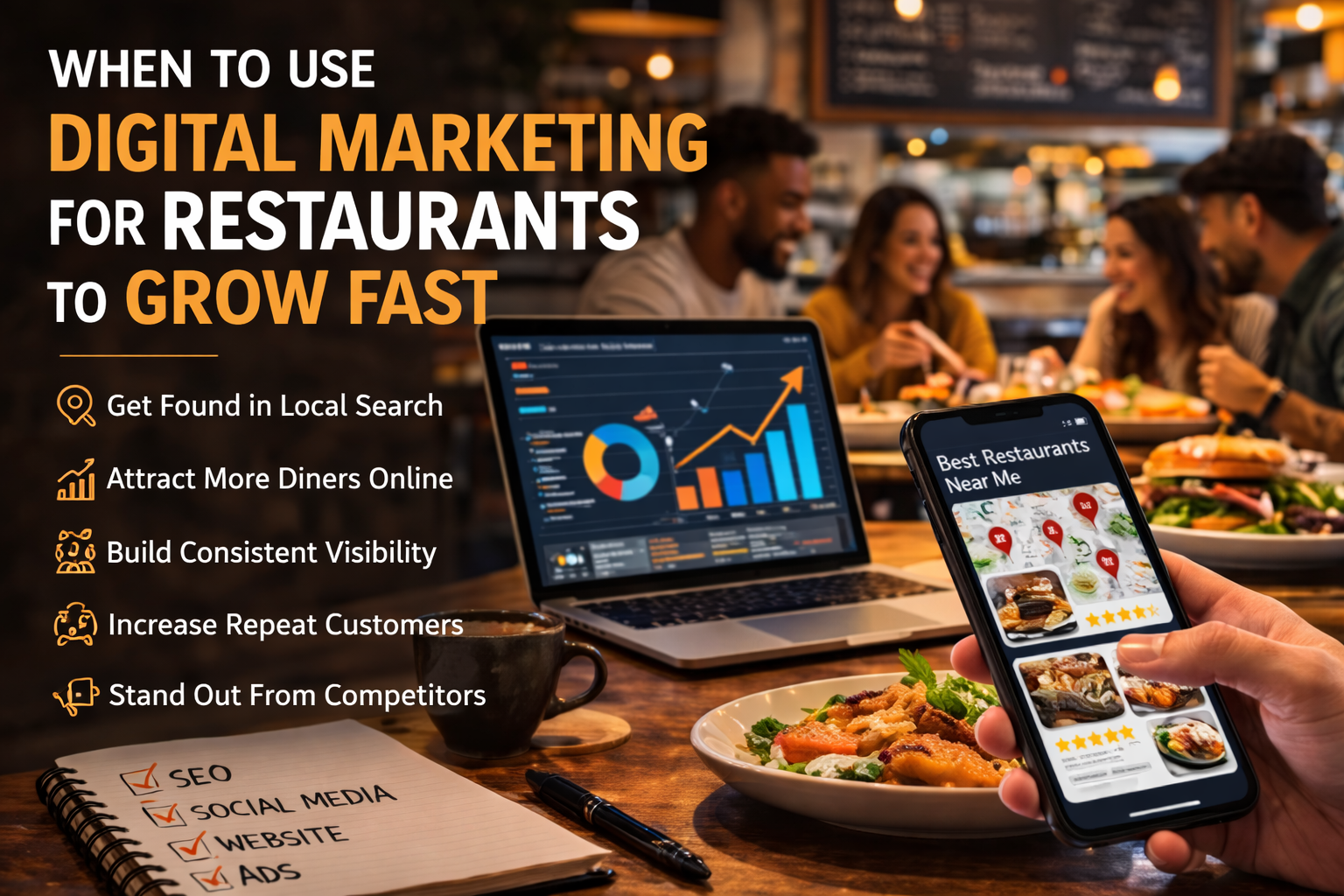

Restaurants usually begin exploring digital marketing for restaurants when growth slows, visibility becomes inconsistent, or new competition changes the local dining landscape. The question is not simply whether digital marketing works. The more practical question is when it becomes necessary for a restaurant that wants steady customer flow.
For restaurant owners and managers, especially in competitive markets like New York, Los Angeles, Chicago, Houston, and Miami, discovery often determines whether diners walk through the door. Good food and strong service remain essential, but diners rarely find a restaurant by accident anymore. Most decisions happen online first.
Digital marketing becomes useful when restaurants need more reliable visibility in search results, map listings, social discovery, and local advertising. The purpose is not rapid promotion or viral exposure. The goal is helping restaurants appear in the places where diners are already looking for their next meal.
Understanding the right timing, limitations, and realistic expectations helps restaurant operators make informed decisions about restaurant digital marketing services or broader Marketing Packages for Restaurants.
New restaurants often assume location and word of mouth will drive early traffic. In some neighborhoods that may still happen, particularly in dense food districts.
However, many new restaurants discover that customers search online before visiting a new place. This is especially common in cities where diners compare several options before making a choice.
Digital marketing becomes useful during the early months when a restaurant needs to establish visibility signals such as:
Without these signals, even well-reviewed restaurants may remain difficult to find.
Another common scenario involves restaurants that perform well on weekends but struggle during weekdays.
Operators often assume the issue relates only to pricing, menu design, or promotions. In practice, the challenge is frequently related to visibility during search moments. If a restaurant does not appear when people search for lunch spots, quick dinners, or takeout options nearby, fewer potential diners even consider it.
Digital marketing can help restaurants appear during these everyday discovery moments.
In most major food cities, restaurant turnover is constant. A street that once had two Italian restaurants may now have five.
When new restaurants enter the market, they often launch with optimized websites, active social profiles, and strong Google Business listings. Older restaurants that relied primarily on reputation or repeat customers sometimes lost visibility.
This shift often prompts restaurant owners to evaluate restaurant digital marketing services for the first time.
Restaurant growth online rarely comes from a single platform. Instead, it develops through several visibility signals working together.
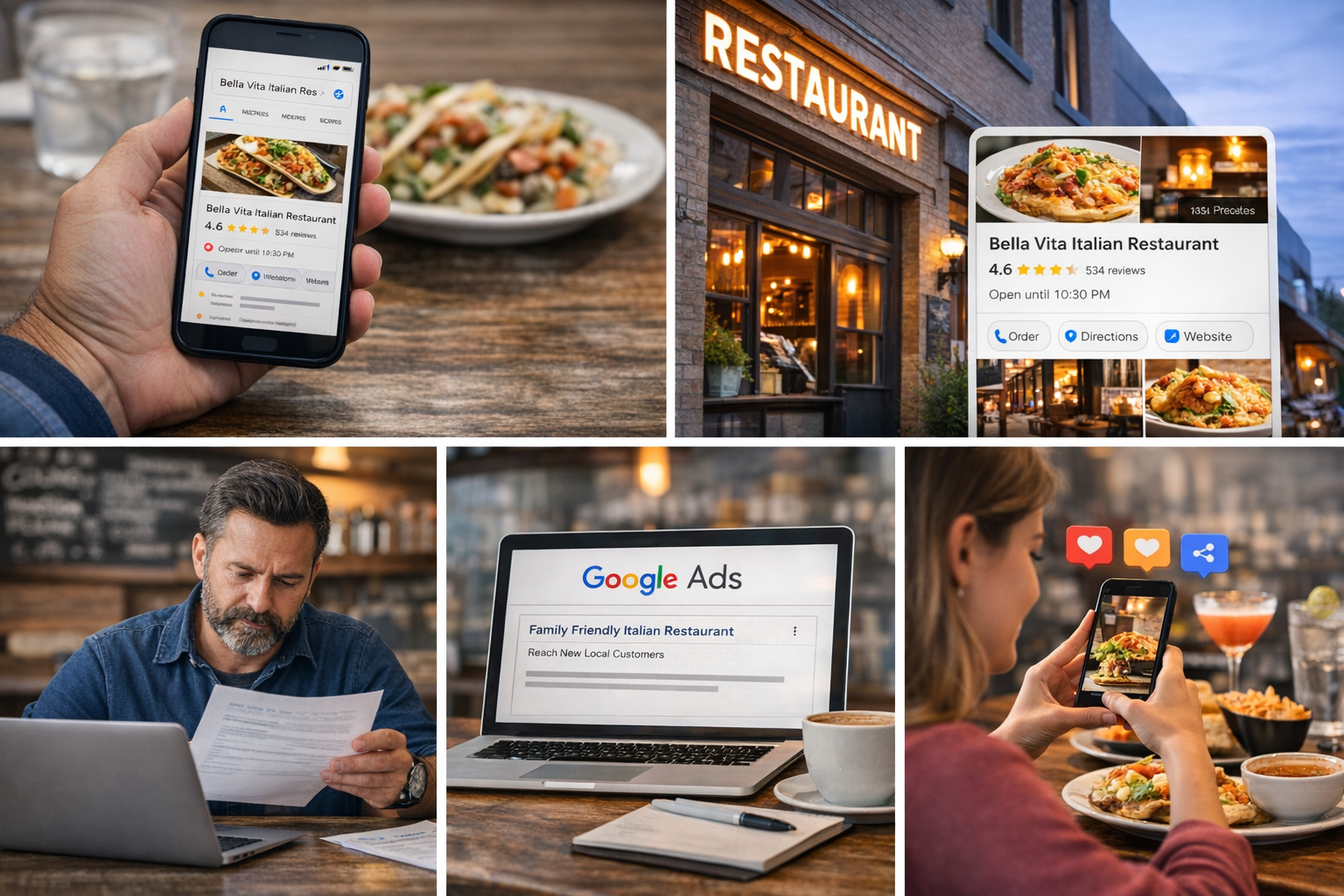
Local search is one of the most consistent drivers of restaurant discovery.
When someone searches for “best tacos near me” or “brunch in Chicago,” search engines evaluate several factors before deciding which restaurants appear.
These factors typically include:
Local search visibility often becomes the foundation of digital marketing for restaurants because it targets diners actively looking for a place to eat.
A restaurant’s website often serves as the final confirmation step before a diner visits.
Potential customers usually want to check a few details quickly:
Restaurants sometimes underestimate how often customers abandon the decision process if these details are difficult to find.
Website clarity and accessibility frequently influence whether a visitor converts into a diner.
Social media platforms play a different role compared with search engines.
People often discover restaurants casually while scrolling through photos or short videos. Food presentation, atmosphere, and visual storytelling influence curiosity.
However, social media rarely replaces search entirely. A diner who notices a restaurant on Instagram typically confirms details through Google before visiting.
Paid search advertising allows restaurants to appear for specific queries such as:
These ads can support visibility during key dining times. They are often used in combination with other strategies within structured Marketing Packages for Restaurants.
Paid campaigns can increase exposure quickly, but they require careful budgeting and realistic expectations.
Restaurant owners sometimes ask whether they truly need digital marketing or if traditional reputation building is enough.
The following framework can help evaluate the situation.
Owners can ask a simple question when guests arrive:
“How did you hear about us?”
If most responses involve repeat customers, walk-ins, or word of mouth, the restaurant may be relying on a narrow discovery channel.
Operators should try searching phrases that describe their cuisine and location rather than the restaurant name.
For example:
If the restaurant rarely appears in these searches, online visibility may be limited.
Common issues include:
Small inconsistencies can affect search visibility and customer trust.
Observing how nearby restaurants appear in search results can reveal visibility gaps. Competitors often invest in digital presence earlier than expected.
Many articles about restaurant marketing focus on tactics without addressing the underlying decision process.
Appearing in search results increases exposure, but it does not guarantee customer visits. Menu quality, pricing, atmosphere, and service remain central factors.
Digital marketing influences discovery, not the entire dining experience.
Restaurants sometimes turn to digital marketing when deeper issues exist. Examples include slow service, inconsistent food quality, or confusing menus.
If the customer experience does not match expectations, marketing alone will not create sustainable growth.
A small neighborhood café may benefit more from local search visibility than from large advertising campaigns. Meanwhile, a multi-location restaurant group might require more structured Marketing Packages for Restaurants that include advertising, search optimization, and brand management.
Strategies should match business goals and scale.
Consider a casual dining restaurant in Chicago that performs well on Friday and Saturday nights but struggles Monday through Thursday.
The owners initially attribute the problem to seasonal demand. However, closer examination reveals several visibility gaps:
Potential lunch customers simply never encounter the restaurant during search.
In this case, improving local search visibility and updating online information may increase weekday traffic. The change is not dramatic or instant, but it aligns the restaurant with the way diners search during the workweek.
While digital marketing for restaurants can improve visibility, it also involves trade-offs.
Listings, ads, and social content require updates. Restaurants that treat marketing as a one-time setup often see diminishing results over time.
Paid advertising platforms adjust pricing based on competition. In major cities, search ads may become more expensive during peak dining seasons.
Restaurants should monitor spending carefully.
Organic visibility improvements, such as search rankings and review growth, tend to develop over months rather than days.
Restaurants that expect immediate traffic spikes may become frustrated if expectations are unrealistic.
Digital marketing becomes relevant for restaurants when discovery challenges begin to affect customer flow. This often occurs when competition increases, visibility in local search is limited, or traffic becomes inconsistent.
For many restaurants, online discovery now plays a significant role in how diners choose where to eat. Search listings, map profiles, websites, social discovery, and advertising each contribute to visibility in different ways.
Understanding when and how to use these channels helps restaurant owners make thoughtful decisions. Digital marketing does not replace strong food, service, and atmosphere. Instead, it ensures that potential diners can actually find the restaurant when they begin deciding where to eat.
Many restaurants begin exploring digital marketing when they notice declining visibility, slower traffic during certain periods, or increasing competition nearby. It can also be helpful during new restaurant launches.
Small restaurants may benefit from some digital marketing activities, particularly local search optimization and accurate online listings. The scale of services should match the restaurant’s size and goals.
Not always. Some restaurants manage basic marketing internally, while others use structured packages that include advertising, search optimization, and website management.
Some advertising campaigns can generate visibility quickly, but organic improvements such as search rankings and review growth often develop gradually over several months.
Social media can create awareness and curiosity, but many diners still rely on search engines and maps when choosing where to eat.
It often becomes more relevant in cities with high restaurant density because diners have many choices and frequently rely on search tools to compare options.
Restaurant owners sometimes want an outside perspective on how their business appears online and whether digital marketing could improve visibility. A strategy discussion can help clarify current strengths, gaps, and realistic options based on the restaurant’s situation.